

America’s Shameful History Of Manifest Destiny That Won’t Be Taught In Many States…
Though greatly romanticized, Manifest Destiny also had a real, more complex, dark side. The doctrine’s ideals were conscious of what it meant to create a better life in lands that already had lives going about. American westward expansion, for example, resulted in the genocide of Native Americans, as well as the forced relocation (or at times voluntary but manipulated) of many more. To the south, the conflicts with Mexico and the eventual outbreak of a declared war also resulted in unfair and bloody consequences for both nations.
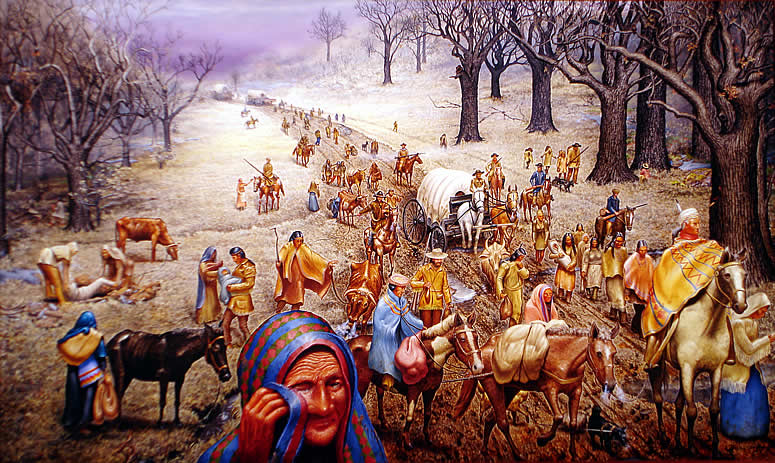
Many white settlers and proponents for expansion worried that Native Americans would prove to be obstacles to their land ambitions. Many thought that Native Americans stood in the way of progress and civilization; many white settlers assumed they were uncivilized “savages” who made no good use of the land they possessed. These proponents of expansion pressured the American federal government to remove the Native Americans from their lands and give them instead to the new settlers.
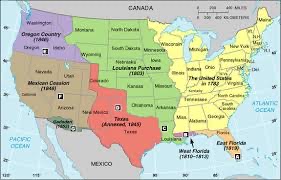
In addition to westward expansion and the forced removal of Native American tribes, the United States sought to expand its borders by looking at its neighbor in the south. Mexico had undergone a similar independence struggle only a few decades after the United States. By 1821, Mexico was an independent country more than twice the size of America but consumed by internal turmoil and frequently threatened by external interventions.
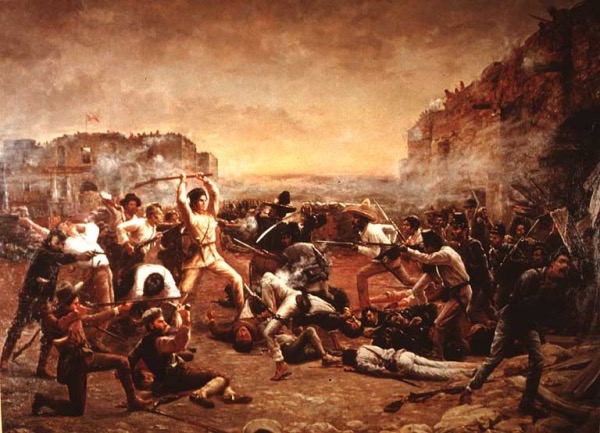
In 1846, American President James K. Polk found a casus belli to invade Mexico when American military forces were attacked on disputed land. Thus, the Mexican-American War began, a conflict that led to a dramatic increase in America’s borders and its positioning as the main hegemonic power on the continent. Although not everyone in the United States agreed to the “wicked” war, namely the Whigs opposed it, a surge in patriotism and the fulfilled promise of Manifest Destiny made the United States’ ambitions unstoppable.
The expansionist ambitions of the United States were, on many occasions, closely linked to the institution of slavery. Especially during the 19th century, slavery was a driving factor in the political dynamics of America. By the 1850s, tensions were as high as ever, as any further United States territorial expansions meant the topic of slavery would rise again and stir debate.

Thus, every new territorial addition for the United States meant slavery was back on the table for discussion. Tensions continued to rise until the outbreak of the American Civil War. Manifest Destiny had planted the seeds for rising tensions, with many standing against slavery also opposing reckless expansionism, such as President Abraham Lincoln, who opposed the Mexican-American War. Furthermore, Manifest Destiny was undoubtedly driven by slavery, as the American expansionist machine was fueled by slavery.
Manifest Destiny was the initial chapter of a larger story of American expansionism and hegemony. By the end of the 19th century, there was little room in North America for the United States to take without major consequences or conflicts. Thus, America turned its attention towards different shores and different actions. Namely, the United States made use of its new position as a major power to police the continent and fulfill its own national interests. Through a new interpretation of the Monroe Doctrine, the United States intervened in Latin America to secure its interests. The Monroe Doctrine was first articulated by President James Monroe as a foreign policy opposing European colonialism in the Americas. It claimed to work in the interests of the US’ neighbors, but instead, the doctrine functioned at times more like a new brand of Manifest Destiny. America assumed the position of necessary interceder, arguing that if they didn’t intervene, European powers would.

Manifest Destiny is one of the major puzzle pieces necessary to assemble the general picture of America as a country. Beginning with the birth of the nation, its repercussions can be felt even today. A decisive policy with complex and controversial angles, Manifest Destiny is crucial for understanding the United States’ historical landscape and deciphering the modern stage it stands on now.
 elamink
You must be logged in to post a comment.